You’ve wanted to shrink in a room while feeling like the biggest thing in it.
So have I.
This is the program I wish I’d had.
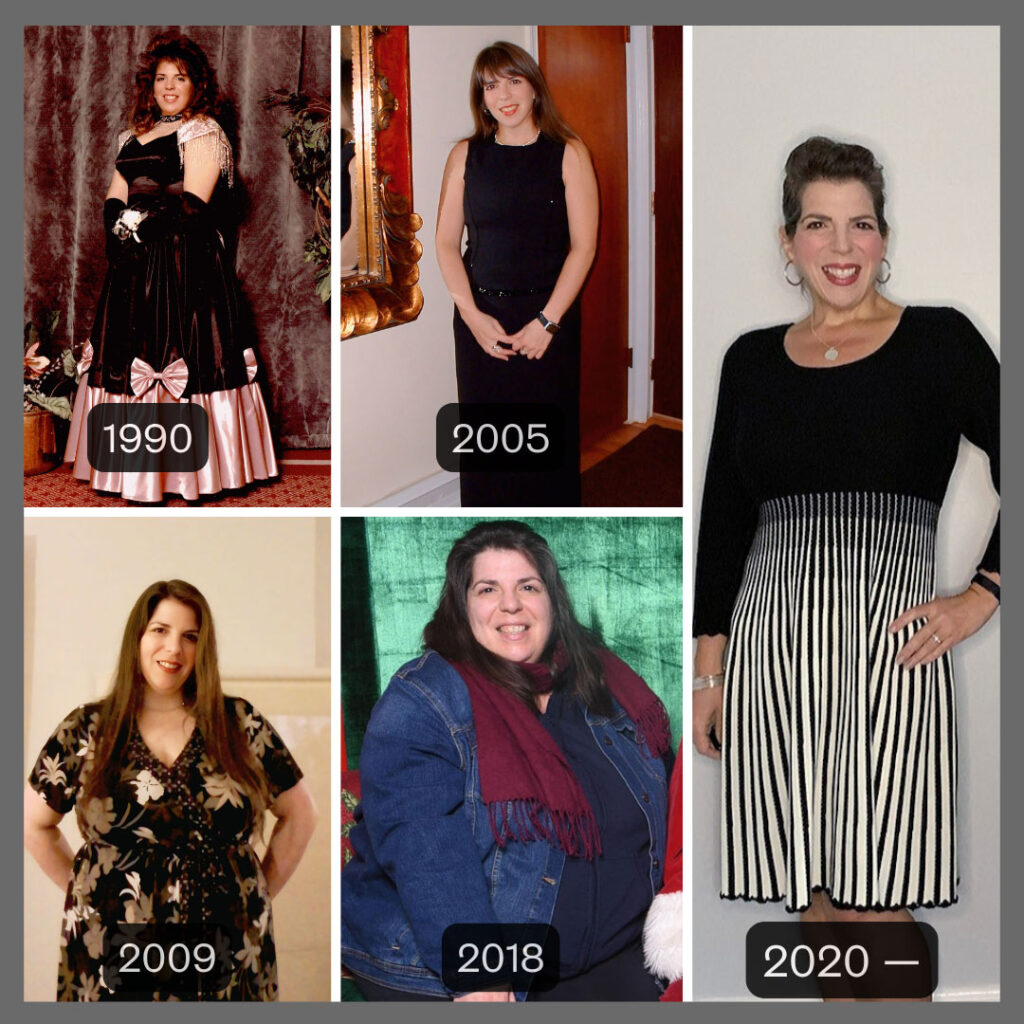
What I know from the inside
I know what it is to have the way we look feel like the whole story of who we are.
Valued. Or not.
Never enough.
I know the cycling. The losing. The regaining. The devastation. The starting over. Again. And again. And again.
I know what it’s like when people feel free to say it to your face.
- You have such a pretty face.
- Have you tried eating less?
- Nothing feels as good as thin feels.
- Once you lose it, you’ll feel so much better.
- Or the version with no wrapping on it. Lose the weight or nobody will marry you. You’ll never be taken seriously. You’ll never get promoted.
All of it from people who’ve never spent a day in this body.
I’ve lost thousands of pounds by now, and gained back every one. Except the last time. I lost 160 pounds, and I’ve maintained over 135 of it off for years now.
Shame is not a motivator. It’s a soul killer.
What nobody prepared me for
Everything I was ever taught was about how to lose it.
Almost nothing was about how to live once I had.
That gap is where this program started. I got to the other side and realized I’d been handed a whole education in something that ends, with no preparation for the part that doesn’t.
Then came the part I didn’t expect. How you get there shapes whether it lasts. Rush it, punish yourself through it, run the whole thing on rules and willpower, and you arrive with nothing underneath you.
So what we’re after here isn’t a number. It’s a decent level of peace. With food. With your body. With yourself. And it can start long before anything about your body changes.
What this looks like in a real moment
I’ve inhaled a whole bag of chips when I was stressed and realized partway through that I wasn’t even there for round one. Then wondered how that just happened. And still wanted more, because I’d missed it.
For a long time I thought I was after the reward. The taste. Something that felt good after a hard day.
I was solving the wrong problem.
The food could be enjoyable. What I needed was to feel calmer. We soothe babies with a bottle. Food is tied to comfort and safety for most of us, so reaching for it under stress makes sense.
My nervous system was the thing that was truly agitated. It was what was sending the SOS.
Now when I’m stressed and visions of my favorite decadent foods show up, I pause and check. Is it the food I want, or do I need to get myself steady first?
Breathe, go outside, shake like a pup. Calm isn’t usually what shows up. Steadier is, and on the days even that doesn’t come, the pause did something on its own.
From there I can have the ice cream and be present enough to enjoy it. Or find I don’t need it.
The difference is that once I understand what’s actually happening, I have more options.
The problem was never just the food
Move more and eat less was never going to hold. The advice focused on what to do. It left out almost everything that made it hard to keep doing.
The harder I restricted and punished myself, the stronger the cycle came back. I kept treating that as a failure of willpower. It was a sign I didn’t yet understand what I was actually up against.
My survival mechanisms didn’t care about the size of my jeans.
Which is why I stopped looking for a better set of rules. Two things replaced them.
What holds is what fits your real life. Your real body. Your real circumstances. Someone else’s plan was never going to survive contact with yours.
And don’t should yourself. We’ve all done the rules, the exhausting lists, the foods we can and can’t have. Change comes from grace, understanding, options, and learning to be on your own side instead of at war with yourself.
Shame has never once made any of it better.
How the work moves
We see the pattern first. Then we understand why it’s there. Only then do we build anything on top of it.
That order is the whole thing. Most programs start at the building and wonder why it collapses.
The THRIVE Wisdom Method
Regulate
Reframe
Sustain
Regulate
Learning to steady your own system is the foundation. Most of the programs I tried never taught me that. Regulate creates enough steadiness to see what’s actually happening.
Reframe
Then we go after the patterns, the beliefs, and the stories you’ve built about yourself. Reframe changes what the pattern means.
Sustain
Then we build practices that fit an ordinary, chaotic day rather than your best one. Sustain turns the insight into something your real life can hold.
I’m an iPEC Certified Professional Coach. Thirty years of coaching and two decades of building programs sit behind the method. The food and body pieces come from years of my own transformation, years of research, and countless conversations with people living the same patterns.
What this is
What I Wish I Knew is coaching for the patterns, beliefs, and nervous system responses that shape how you relate to food, movement, and your body. It isn’t a diet or a meal plan, and the scale isn’t how we measure whether it worked.
We move through the curriculum together, with guided reflection tools so the work travels into your real life. We meet more often at the start, then space out as things settle. This is one on one.
This work may feel especially familiar to women who’ve spent years carrying other people’s opinions about their bodies. It’s open to anyone who recognizes themselves in it.
Some of what we work through:
- Understanding your own patterns before changing anything
- Regulating your nervous system, the foundation for everything else
- The principles that hold when rules don’t
- Cravings, what they actually are and what to do with them
- Food, out of the frame of good and bad
- What food has been carrying for you
- Movement, sleep, and the daily support your system runs on
- Fear, resistance, and the traps that pull people off course
- Your body, from something to fix to something to understand
- Identity, self-trust, and whether change holds
See what we work through in the program overview.
View the Program Overview
If you’re using a GLP-1, or coming off one
A GLP-1 can change what happens with hunger. What sits around food doesn’t move on its own. What it’s been carrying for you. The voices that show up around it. What you reach for when the pressure comes back.
That’s the work here. Medication decisions, nutrition, and exercise stay between you and your clinical team. This coaching works with the patterns, emotions, beliefs, and self-trust surrounding food and your body.
I ask clients to share the overview with their prescriber, so everyone’s clear on the scope of what we’re doing. After each session you get notes, and you decide whether they go any further. If you’d like me to speak with your clinician, I’ll need that in writing from you, and what I’ll cover is how the program works.
What we’re aiming at
I was morbidly obese for most of my life, so I know how it lands to hear that a smaller body isn’t the goal. Smaller is the carrot. It’s the thing we’re promised will make everything else fall into place.
The smaller body didn’t bring the peace I was promised. The peace came from the work. From understanding myself. From dropping the shoulds. From learning to be on my own side.
You were asked to solve a deep pattern with rules built for behavior alone. That doesn’t mean you failed. It means the tools left too much out.
So the goal is a decent level of peace. With food. With your body. With yourself.
Not once the weight is gone. Not even if it never goes. Now. Wherever you are.
This is coaching. It isn’t medical care, therapy, or nutrition counseling, and it doesn’t replace any of them.
If what you’re carrying needs clinical treatment, including an active eating disorder, that care comes first. I’ll tell you if I think that’s where you are.